The situation
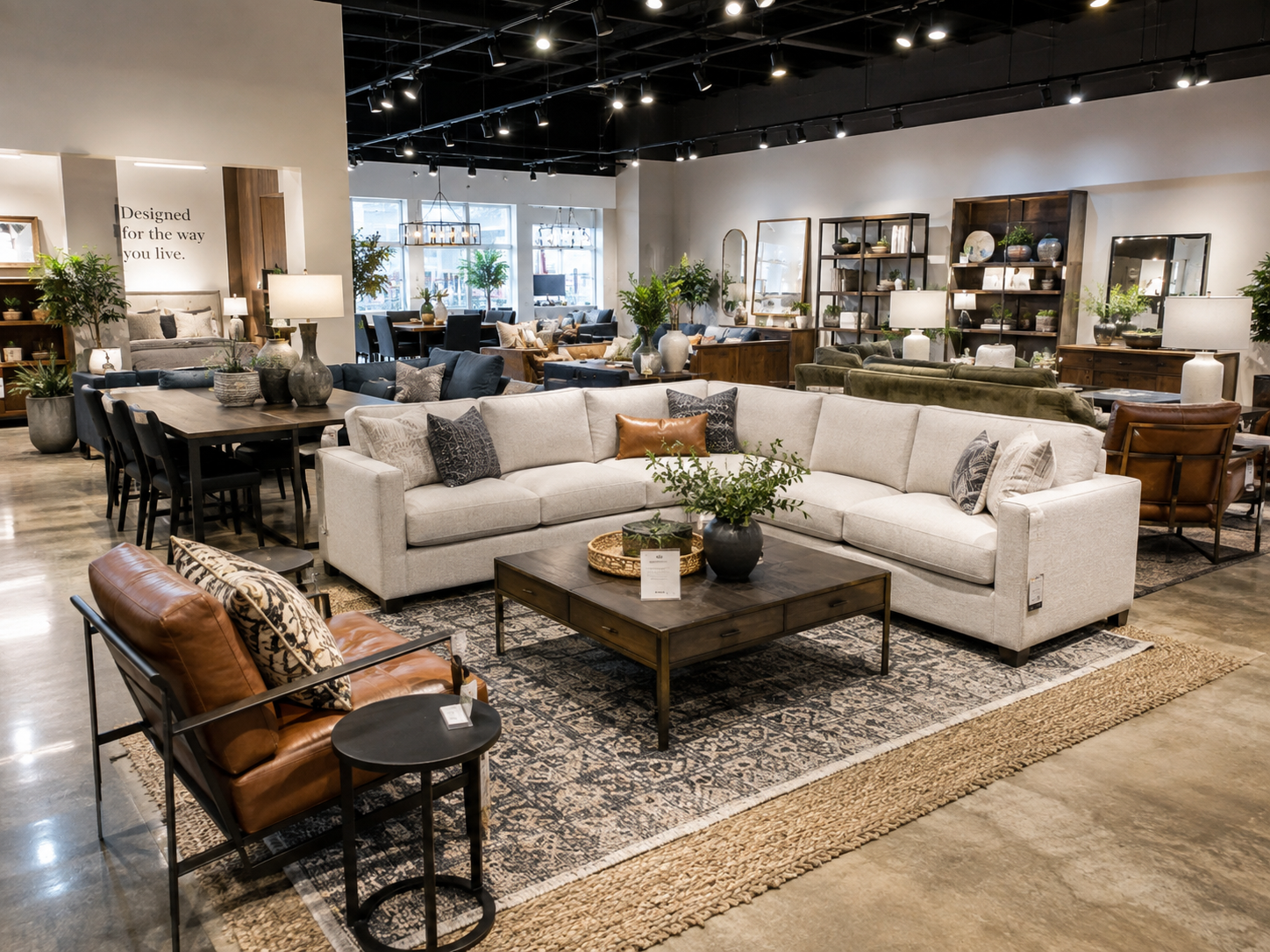
The client was a Midwest furniture chain running eight stores. Like most furniture retailers, its calendar was built around holiday sale events, and Memorial Day had long been one of its biggest traffic drivers. But the store was hitting a wall that the whole category knows well: promotion fatigue. Shoppers had been conditioned by years of markdown events to expect a bigger discount every season, and the same percentage off no longer moved the traffic it once did. The chain faced a choice between discounting even deeper, which would erode already thin furniture margins, or finding a different reason for shoppers to walk in and buy.
What they tried before
Before this campaign, the chain leaned on the standard retail levers. It ran percentage-off storewide sales, financing offers, and clearance events, each promoted through the usual mix of email and local advertising. Those tactics still produced spikes, but the spikes were shrinking, and each event had to be louder and cheaper than the last to hit the same numbers. Discounting was quietly training the chain's own customers to wait for the next markdown, which pulled margin down without building any lasting advantage over the discounter down the road.
What they did
For a single 21-day campaign, the chain replaced its usual Memorial Day discount promotion with a value-added reward. It deployed 800 Enjoy a Great Escape certificates across the eight stores, offering the getaway to customers who completed a qualifying purchase rather than cutting the price on the floor. The mechanic was simple for associates: confirm the pieces were right for the customer, resolve any hesitation on delivery or fit, and then present the certificate as the reason to place the order during the visit. Because recipients redeemed their travel directly with a dedicated support team, store staff never touched logistics and stayed focused on selling.
The result
Measured against the chain's usual discount promotion, the 21-day campaign moved every number that mattered. Showroom traffic rose 58 percent, the close rate improved 24 percent, and average order value climbed 12 percent as shoppers stepped up to qualify for the reward. Most importantly for the owner, the campaign returned 5.2 times its cost compared with the prior discount-led event, and it did so while holding price on the floor instead of giving margin away. The reward drew traffic like a sale without resetting what customers expected to pay next season.
What other businesses can copy
The lesson generalizes well beyond furniture. First, a reward can draw traffic like a sale while protecting price, which breaks the promo-fatigue cycle instead of feeding it. Second, setting the qualifying threshold at a full-room or higher price point nudges average ticket up rather than down. Third, concentrating the offer into a defined window, here 21 days, creates honest urgency you can staff and measure. Any high-consideration retailer that has been trained to discount can test the same play: swap one markdown event for a value-added reward, hold price, and compare the two campaigns side by side on traffic, close rate, average ticket, and ROI.
Why the reward outperformed a discount
The reason the getaway beat a markdown comes down to perceived value and price integrity. A percentage-off event asks the customer to compare your lower price to the next store's lower price, a contest the deepest discounter always wins and one that comes straight out of gross. The Enjoy a Great Escape certificate changed the comparison entirely. Its perceived value sat well above its fixed program cost, so shoppers experienced the offer as a meaningful bonus rather than a few dollars saved. That gap between what the reward felt worth and what it cost the chain is precisely why traffic and close rate rose without any price concession on the floor. And because the store did not cut prices, it did not teach customers to hold out for a deeper deal the following season, which is the hidden long-term tax of every discount event.
How the program was deployed
Deployment was intentionally light on the sales team. Certificates were issued on demand, so associates always had the reward available during a conversation without inventory or paperwork overhead. Reps followed a simple sequence rather than a script change: qualify the customer's needs, confirm the pieces and delivery fit, and introduce the certificate only after the customer was ready to buy, framed as the reason to place the order today. Redemption was handled entirely by a dedicated travel support team, which meant the eight stores could run a coordinated 21-day push without adding operational load. That combination, high perceived value for the customer and near-zero friction for staff, is what let a single campaign lift traffic, close rate, and average ticket at the same time.